English| EUR
Suggested for you
More currencies
Choose a language
Roughly 50 kilometres west of the capital, in Nakhon Pathom province, a working monastery draws travellers who have read about hand-poked sacred tattoos and want to understand the practice before committing to anything. This page sets out what the temple is, who performs the yantra work, and what the day looks like from arrival to departure. The practical detail sits in the sections below; this is the orientation.
Quick answer
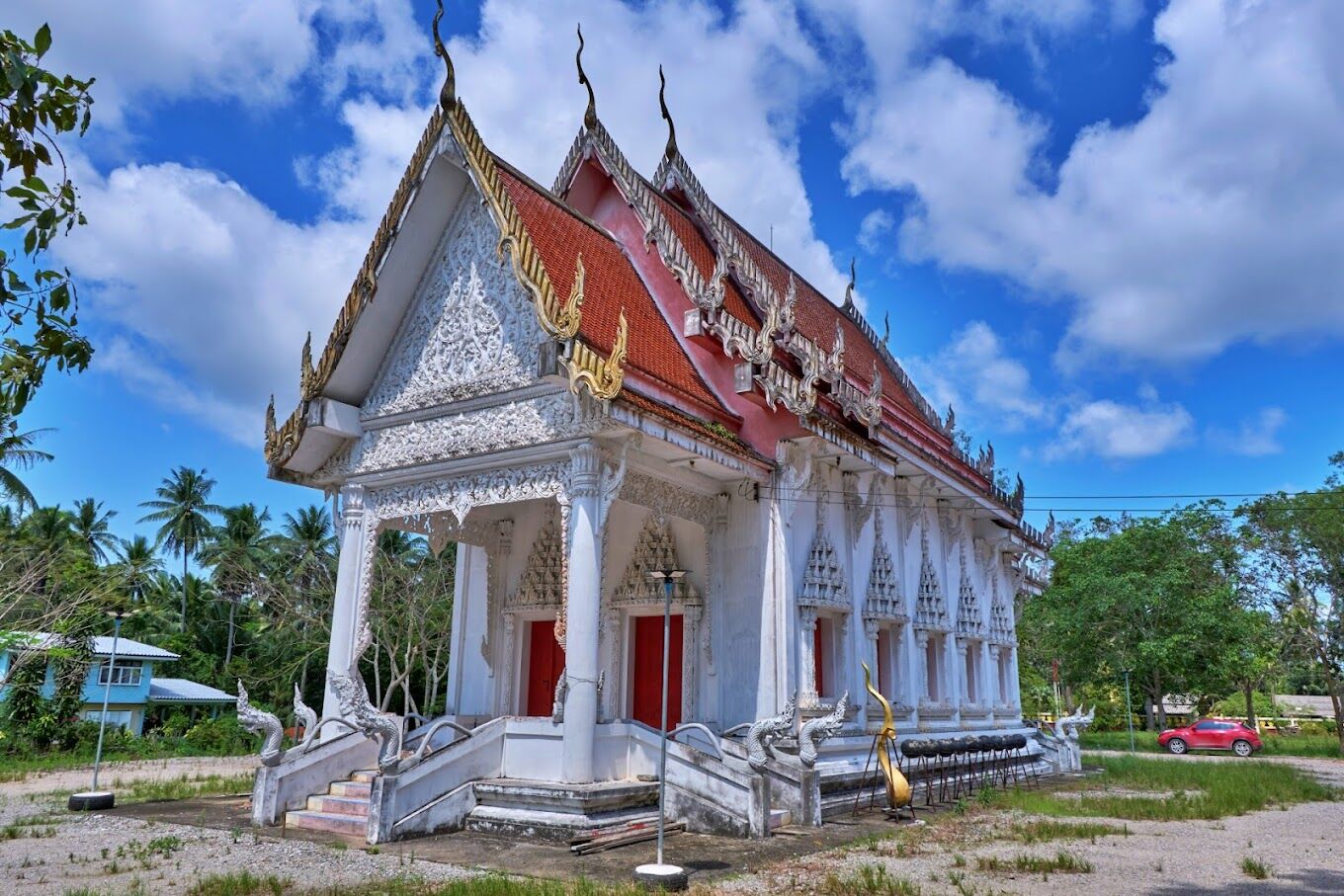
The tradition most people mean by a sak yant tattoo bangkok monk experience is centred on Wat Bang Phra, Bang Kaeo, Nakhon Chai Si District, Nakhon Pathom 73120, Thailand. The temple is open 08:00–16:00 daily and entry costs 0 THB, though donations and offerings are customary. Nothing is booked in advance at the temple itself, and queues form early.
Wat Bang Phra is not a tattoo studio with a monastery attached. It is a functioning Theravada temple where ordained monks and lay ajarn practise yantra tattooing as a devotional act, and where the majority of people in the queue on any given morning are Thai — soldiers, taxi drivers, market traders — not travellers. That ratio surprises most first-time visitors, and it explains almost everything about how the day unfolds. The designs themselves are geometric prayer diagrams rather than decorative art. A yantra is built from Khom script, an old Khmer-derived alphabet used for Pali incantations, and each pattern carries a specific intention: the Hah Taew five lines, the Gao Yord nine spires, the Paed Tidt eight directions, the Suea Koo twin tigers. The needle is a long steel or bamboo rod called a khem sak, worked by hand, and the recipient does not choose the design in the way a Western customer picks from a flash sheet. The ajarn selects it, often after a brief exchange about what the person is carrying. A blessing follows, murmured over the finished lines, and the ink is considered active only because of it. This is the part that a sak yant tattoo bangkok monk guide written for a Western audience tends to underplay: the tattoo is the residue of a rite, not the point of it. Context matters for anyone weighing the trip. Wat Bang Phra sits well outside the city, in Nakhon Chai Si, and it draws its largest crowds during the annual Wai Khru festival, when thousands return to renew their vows and the temple grounds fill past capacity. On ordinary days the atmosphere is quieter — a hall, mats on the floor, a slow-moving line, the smell of incense. Precepts apply to anyone who receives the ink, and the temple asks that they be observed afterwards. What to do with all this depends on why the reader came. Those researching a sak yant tattoo bangkok monk visit purely as cultural observation can walk the grounds, watch respectfully from a distance, and leave an offering without participating. Those intending to receive a yantra should treat the practical sections that follow — timing, getting there, conduct, what to bring — as the operational half of this page. Guided Bangkok temple tours and arranged sak yant experiences exist for visitors who would rather not navigate the language barrier or the queue alone, and they are listed separately on this site.
“The tattoo is the residue of a rite, not the point of it.”
The best arrival window is 08:00–10:00 to avoid long queues for Sak Yant tattooing ceremonies. Arriving early during the morning hours provides the most efficient access to the monks.
—
Visiting during the week significantly reduces wait times compared to weekends.
—
As the day progresses, the number of individuals seeking Sak Yant typically increases.
—
Weekends see higher volumes of visitors and longer queues for ceremonies.
Hot, high humidity (30-35°C)
The annual Wai Kru ritual draws massive crowds, making it the most crowded time of year.
Verdict: The best time to visit is weekday mornings between 08:00–10:00 to ensure a shorter wait for the Sak Yant process.
Wat Bang Phra is open to visitors daily throughout the week for those seeking Sak Yant ceremonies.
Wat Bang Phra is located in the Nakhon Chai Si District of Nakhon Pathom. The most reliable way to reach the temple from Bangkok is by private car or taxi.
Direct drive from Bangkok via Route 4 (Phet Kasem Road)
Drive via Highway 338 or Route 4 to Nakhon Chai Si
Depart from Southern Bus Terminal (Sai Tai Mai) to Nakhon Pathom, then local taxi
Arrive between 08:00 and 10:00 to avoid the longest queues for ceremonies. Private transport is recommended as the temple is situated in a rural area away from major public transit lines.
Wat Bang Phra is a working monastery, not a tattoo studio, and the monks tattooing here are performing a religious rite. How you dress, sit and behave in the sala shapes whether you are welcomed into the ceremony.
A visit to Wat Bang Phra rewards a little advance thinking, so work through these steps in the weeks and days before you go.
Everything you need to know about sak yant tattoo bangkok monk
To avoid long queues for the sacred ceremony, the best arrival window is 08:00–10:00. Arriving early helps ensure you are positioned well for the day's proceedings.
The official entrance fee is 0 THB as entry to the temple is free. However, small donations or offerings of flowers and incense are considered customary practices.
Wat Bang Phra is located in the Nakhon Chai Si District of Nakhon Pathom. You may reach the location by private taxi or chartered transport from the city.
Visitors must maintain modest dress, covering shoulders and knees at all times. Please remain quiet, respectful, and follow the guidance of the local practitioners throughout your visit.
While not prohibited, it is generally discouraged to have minors participate in traditional tattooing due to the ritualistic nature and spiritual commitment involved.
It is traditional to present a small offering, typically consisting of flowers and incense, which can be purchased near the temple grounds. These items serve as a gesture of gratitude toward the master.
Yes, these bamboo-instrument markings are permanent. They are applied using sacred ink and involve specific spiritual rituals intended to provide protection and blessings.
Most temple ceremonies operate on a first-come, first-served basis rather than a structured booking system. It is wise to prepare for a day of waiting and observation at this holy site.