English| EUR
Suggested for you
More currencies
Choose a language
An hour west of the capital, in a low-rise temple compound in Nakhon Pathom, monks and lay masters still apply sacred yantra designs by hand with a long metal rod. This sak yant Bangkok guide sets out what the ritual actually is, who receives it, and what a first-time visitor should expect at the door. Practical detail — hours, costs, getting there — sits in the dedicated sections below.
Quick answer
Wat Bang Phra is the best-known place near Bangkok to receive a traditional sak yant tattoo, and entry costs 0 THB, with donations or offerings customary rather than fixed. The temple opens 08:00–16:00 every day of the week. Designs are chosen by the master, not the recipient, and the blessing that follows the needlework is considered inseparable from it.
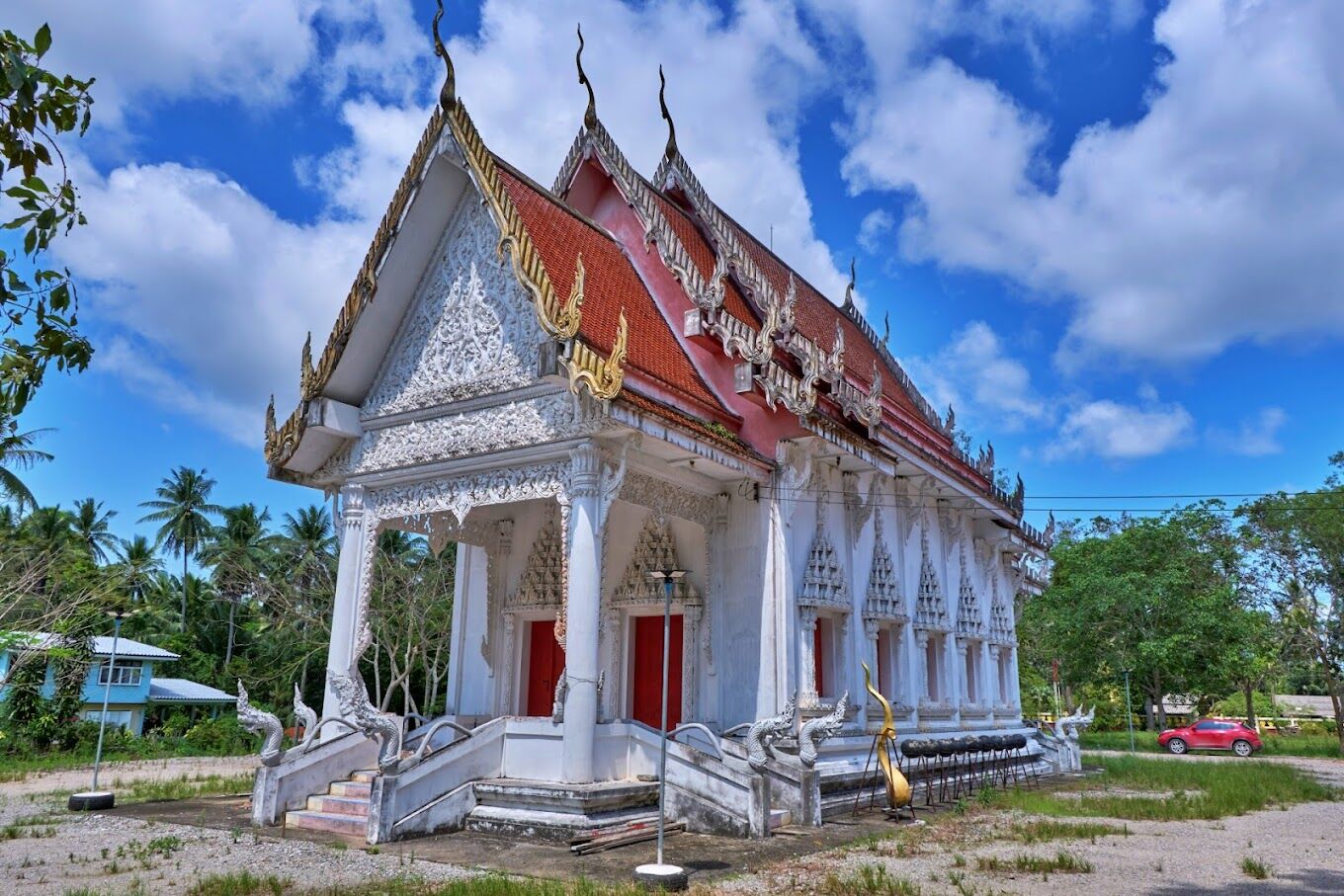
The rod used at Wat Bang Phra is roughly the length of a forearm. It is not a bamboo stick in the popular sense but a khem sak — a tapered steel needle, sharpened to a point and dipped in ink between strokes. The master steadies it with one hand, drives it with the other, and works at a pace closer to calligraphy than to machine tattooing. A full yantra can be laid down in twenty minutes. That speed surprises most visitors, and it is the first of several expectations worth revising. The designs themselves are not decorative motifs. Each yantra combines geometric frames with khom script, an old Khmer-derived alphabet used for Pali incantations, and each carries a specific intention: the Gao Yord for protection under nine peaks, the Hah Taew for five lines of blessing, the Paed Tidt for the eight directions. Recipients do not order from a catalogue. The ajarn — the master, monk or layman — assesses the person in front of him and selects accordingly, which is why a traditional sak yant tattoo Bangkok travellers arrive expecting often turns out to be something else entirely. The ink is applied, then the master leans close and breathes the blessing into the design. Without that final step the marking is regarded as incomplete. Wat Bang Phra sits in Nakhon Chai Si, west of the capital along the Tha Chin river, and has drawn pilgrims for decades rather than years. Its annual Wai Khru festival in March draws thousands, and the trance states that occur there have made the temple internationally recognisable. On ordinary days the compound is quiet: a queue forms on the wooden floor of the sala, people wait barefoot with offerings of cigarettes, orchids and incense, and the work proceeds without ceremony. Visitors weighing a Wat Bang Phra sak yant experience against the studio alternatives in the city should understand what distinguishes them. The temple offers no aftercare instructions in English, no appointment system, and no way to reserve a specific master. Guided arrangements exist precisely because of that gap, pairing travellers with an interpreter and a sequence that respects temple protocol. Either route leads to the same tradition. Anyone researching a traditional sak yant tattoo Bangkok itinerary should treat the design as a commitment with meaning attached, not a souvenir, and read the sections that follow before fixing a date.
“Recipients do not order from a catalogue — the master assesses the person in front of him and selects accordingly.”
Wat Bang Phra maintains a consistent daily schedule for visitors seeking traditional Sak Yant tattoos. The temple is open seven days a week to accommodate those traveling to the site.
Traditional Sak Yant tattoos at Wat Bang Phra do not have set commercial prices for the ceremony itself. Instead, visitors typically provide a small donation or ritual offering to the temple.
Verdict: A visitor typically pays 0 THB for admission, though optional donations for the ritual are standard practice.
Wat Bang Phra is located in the Nakhon Chai Si District of Nakhon Pathom, approximately 50 kilometers west of Bangkok city center. The most reliable way to reach the temple is by private car or hired taxi.
Direct drive via Route 338 or Route 4
Drive via Borommaratchachonnani Road (Route 338)
Public bus from Southern Bus Terminal (Sai Tai Mai) to Nakhon Chai Si, then taxi
The temple grounds are expansive; ensure your driver follows the address: V6X6+8MG, Bang Phra, Nakhon Chai Si District, Nakhon Pathom 73120, Thailand. Taxis are generally unavailable for the return journey, so it is recommended to arrange for your driver to wait or book a private return transfer in advance.
Wat Bang Phra is a working monastery, not a tattoo studio, and the ajarn who marks you is a monk or lay master performing a blessing. Conduct that reads as casual elsewhere can end a session before the needle touches skin.
Understanding the physical application of Sak Yant provides insight into the spiritual discipline required during the process. These facts detail the traditional methodology utilized at Wat Bang Phra.
The term Sak Mai refers to the traditional bamboo tattooing method where a sharpened bamboo or metal rod is used to puncture the skin. This technique requires the practitioner to have precise control over the depth and speed of each strike.
The tattooing needle, known as a Khem Sak, is often handed down through lineages of masters. It serves as an extension of the practitioner's focus during the ritualized application of ink.
Traditional ink traditionally contains a mixture of charcoal, snake venom, and palm oil. This preparation is believed to imbue the tattoo with specific protective or auspicious properties.
This temple is globally recognized as a center for Sak Yant due to the influence of the late Luang Phor Pern. His dedication to the practice established the site as a focal point for traditional ink rituals.
The tattooing process is inseparable from the chanting of Pali mantras by the master. These sounds are intended to consecrate the design and reinforce the spiritual intent behind the markings.
Each Yant design consists of sacred geometry and Khmer scripts representing specific blessings. The placement and orientation of these symbols are chosen based on the practitioner's evaluation of the recipient's spiritual needs.
Everything you need to know about traditional sak yant tattoo bangkok
A traditional sak yant tattoo bangkok represents a deep spiritual practice rooted in Buddhist scripture, believed to offer protection and blessings. These markings are applied by monks or masters using long metal needles.
Yes, Wat Bang Phra is a primary site for those seeking an authentic bamboo tattooing experience. The temple is world-renowned for its lineage of master practitioners who maintain these ancient rituals.
The entrance fee is 0 THB, meaning entry to the site is free for all visitors. However, it is customary to provide a small donation or traditional offering, such as flowers or incense, for the spiritual ritual.
The best arrival window is 08:00–10:00 to avoid long queues and the midday heat. Arriving early ensures you can navigate the temple grounds comfortably before the peak crowds arrive.
Visitors must show respect by dressing modestly, covering shoulders and knees. You should also remain quiet and observant during the ceremony to respect the monks and the sacred nature of the space.
While many visitors travel independently, local tour options can help bridge the language gap and explain the significance of the sacred geometry. These services help streamline your experience and provide insights into local traditions.
Customary offerings include a small fee for incense and flowers, which are presented to the master before the tattoo ritual. Always check current temple customs upon arrival to ensure you follow the correct protocol.
When performed by a reputable master, traditional sak yant tattoo bangkok practices prioritize spiritual purity. Ensure you are comfortable with the cleanliness of the instruments and the environment before proceeding with the ritual.